


Springfield homeowners love their decks. From morning coffee overlooking the Ozark hills to weekend cookouts that stretch into the evening, your deck is an extension of your living space. But Missouri weather doesn’t treat wood kindly. Hot summers, humid springs, freeze-thaw cycles in winter, and plenty of rain throughout the year all conspire to turn a beautiful deck into a gray, splintered surface faster than you’d expect.
The good news? A proper stain job can protect your deck for years. The catch? Not all stains are created equal, and applying stain to a deck that isn’t properly prepped is a recipe for peeling, blotchy results. Let’s walk through what you need to know before you restain your deck — including the oil vs. water-based question that trips up most homeowners.
Signs Your Deck Needs Restaining
Don’t wait until your deck looks terrible. By the time the wood is gray and splitting, damage has already set in. Watch for these early warning signs:
- Water no longer beads up — If water soaks into the wood instead of forming beads on the surface, the protective layer is gone. This is the single most reliable indicator.
- Color has faded significantly — All stains fade over time, but if your deck has lost most of its color, the UV protection is wearing thin.
- Wood feels rough or splintery — Run your hand barefoot across a board. If it catches or feels abrasive, the stain’s protective film has broken down.
- You see dark spots or mildew — Missouri humidity breeds mildew. While some stains resist it better than others, visible mildew means it’s time to clean and restain.
- Previous stain is flaking or peeling — Film-forming stains can peel when they’ve exceeded their lifespan. This means the surface needs attention sooner rather than later.
- It’s been 2–4 years since the last staining — Even the best stains eventually wear down. If you can’t remember the last time your deck was stained, it’s probably overdue.
A simple water test takes five seconds: splash some water on your deck on a dry day. If it beads up like a freshly waxed car, you’re in good shape. If it soaks in and darkens the wood, your deck is absorbing moisture — and that’s exactly what stain is supposed to prevent.
Oil-Based vs. Water-Based Deck Stains
This is the question we hear most from Springfield homeowners, and it’s worth a thorough answer. Here’s how the two types stack up:
Oil-Based vs Water-Based Deck Stains
| Factor | Oil-Based Stain | Water-Based Stain |
|---|---|---|
| Penetration | Deep — sinks into wood fibers | Moderate — sits closer to surface |
| Durability | Good UV and moisture protection; lasts 3–4 years on horizontal surfaces | Improving fast; quality formulas last 2–3 years on horizontal surfaces |
| Mildew Resistance | Moderate — linseed oil can actually feed mildew | Good — many include mildewcides |
| Color Richness | Rich, warm tones; enhances natural grain | Good color selection; slightly less grain enhancement |
| Drying Time | 24–48 hours between coats; longer cure time | 1–2 hours between coats; faster overall |
| Cleanup | Requires mineral spirits or paint thinner | Soap and water |
| Odor | Strong — requires ventilation | Low odor |
| Re-coating | Can re-coat without full stripping in most cases | May require full removal before re-coating over oil-based |
| Environmental Impact | Higher VOCs; some areas restrict use | Lower VOCs; increasingly the industry standard |
| Best For | Older, drier wood that needs deep penetration; high-moisture exposures | Newer decks; homeowners who want easier maintenance and lower environmental impact |
Which Stain Type Is Right for Your Deck?
There’s no single right answer — it depends on your deck’s age, condition, and what’s already on it. Here are some guidelines:
Choose Oil-Based If:
- Your deck is older and the wood is dry or weathered — oil penetrates deeper into open grain
- Your deck gets intense sun exposure and needs maximum UV protection
- You’ve used oil-based stain before and want to re-coat without stripping
- You live in a particularly damp, shaded area where deep moisture protection matters
Choose Water-Based If:
- Your deck is relatively new with tight grain
- You want faster drying and easier cleanup
- You previously used water-based stain and want to maintain consistency
- You prefer an eco-friendlier, lower-VOC option
- Mildew resistance is a top priority (and in Springfield, it usually should be)
Important note about switching: You can generally apply water-based stain over oil-based stain after proper preparation, but applying oil-based over water-based can cause adhesion problems. If you’re unsure what’s currently on your deck, professional deck staining starts with identifying the existing finish.
Stain Opacity: Transparent, Semi-Transparent, and Solid
Beyond oil vs. water, you also need to choose how opaque your stain is:
- Transparent stain — Shows the most natural wood grain. Least UV protection. Best for new decks or wood in great condition. Fades fastest and requires reapplication every 1–2 years on horizontal surfaces.
- Semi-transparent stain — The most popular choice in Springfield. Shows grain while adding color and solid UV protection. Reapplying every 2–3 years keeps it looking sharp.
- Solid stain — Hides wood grain like paint but still penetrates the surface. Best for older decks with visible imperfections or homeowners who want more color. Lasts 3–4 years on horizontal surfaces.
Think of it as a spectrum: the more pigment in the stain, the more UV protection it provides, but the less natural wood character shows through. For most Springfield decks that see full sun and rain, semi-transparent stain offers the best balance of beauty and durability.
The Staining Process: More Than Brushing on a Coat
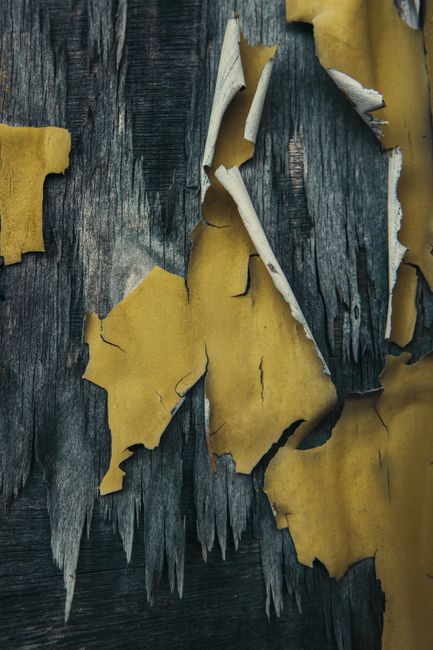
Ask anyone who’s unhappy with their deck stain, and you’ll usually find they skipped preparation. Here’s what a proper staining process actually involves:
- Inspection — Check for rotting boards, loose fasteners, and structural issues before anything else. No point staining a deck that needs board replacement.
- Cleaning — Pressure washing removes dirt, mildew, and failing stain. This is not optional. Stain applied over dirty wood will not adhere properly.
- Brightening — A wood brightener restores the pH of the wood after cleaning and opens the grain for better stain absorption. This step is skipped more often than it should be.
- Drying time — Wood must be thoroughly dry before staining. In Springfield’s humidity, this means waiting 2–4 days after cleaning. Rushing this step is the number one cause of stain failure.
- Application — Apply stain with the grain using a brush, roller, or sprayer (back-brushed for even coverage). Work in manageable sections and maintain a wet edge.
- Curing — Allow proper cure time before moving furniture back. Walking on semi-dry stain can leave permanent marks.
Each step matters. Skip the cleaning and your stain peels in sheets. Skip the drying time and the stain can’t penetrate. Skip the brightener and you get uneven absorption and dark splotches. This is why so many DIY deck staining projects end with frustration — not because the stain was bad, but because the process was cut short.
Springfield’s Climate and Your Deck
Our local weather creates a specific set of challenges for deck maintenance:
- Hot summers — Direct sun breaks down stain’s UV blockers. South-facing and west-facing decks fade fastest.
- High humidity — Springfield’s summer humidity encourages mildew growth, especially on shaded, north-facing decks or under tree cover.
- Freeze-thaw cycles — Winter moisture enters the wood, freezes, and expands. Over time, this causes cracking and splitting.
- Heavy rain — Spring and fall downpours test any stain’s water repellency. Standing water on horizontal surfaces accelerates wear.
This is why maintenance timing matters. The best time to stain your deck in Springfield is in late spring or early fall, when temperatures are moderate (50–85°F), humidity is lower, and there’s less pollen falling. Staining in the heat of summer can cause the stain to dry too quickly, leading to lap marks and poor penetration. Staining too early in spring means the wood may still hold winter moisture.
DIY vs. Professional Deck Staining
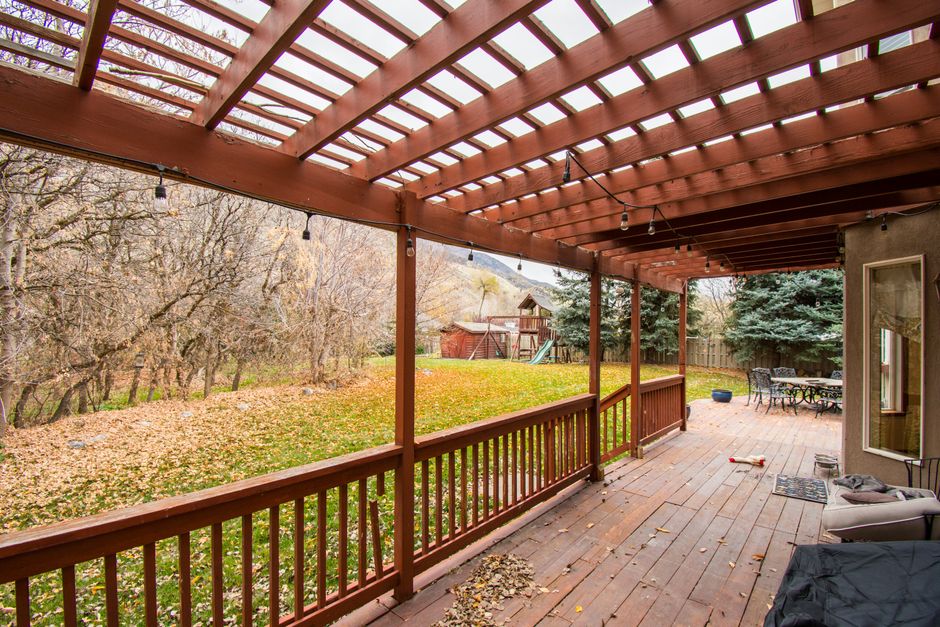
Staining a deck is one of those projects that seems straightforward until you’re in the middle of it. Here’s an honest comparison:
DIY Deck Staining
- Can be done over a weekend (plus drying days)
- You control the product selection
- Risk of uneven application, lap marks, and missed spots
- Requires renting or buying pressure washing equipment
- Mistakes are visible every time you step outside
Professional Deck Staining
- Proper prep, product selection, and application guaranteed
- Knowledge of which stains perform best in Springfield’s specific climate
- Access to professional-grade products
- Consistent, even results with correct technique
- Backed by experience on hundreds of local decks
The most common issue we see with DIY deck staining is uneven application — darker areas where stain pooled, lighter areas where it was brushed too thin, and lap marks where wet edges weren’t maintained. On a flat wall, minor inconsistencies blend in. On a deck floor where sunlight rakes across every board, they stick out like a sore thumb.
If you want results that look even and last as long as the product claims, professional deck staining is worth considering. Our team at First Impressions Painting handles decks throughout Springfield and the surrounding communities, so we know which products hold up locally and how to prep for our specific climate conditions.
Extending the Life of Your Deck Stain
Whether you stain yourself or hire a pro, these maintenance habits will help your stain last longer:
- Sweep regularly — Leaves, dirt, and debris trap moisture against the wood and accelerate wear.
- Clean spills promptly — BBQ grease, food, and drink spills can stain and degrade the finish.
- Do the water bead test annually — Splash water on the boards every spring. If it beads, you’re good. If it soaks in, it’s time to restain.
- Keep plants trimmed back — Vegetation against the deck blocks airflow and creates moisture pockets.
- Touch up high-traffic areas — Steps, railings, and the path from the back door wear out first. A quick touch-up can prevent full restaining for another year.
- Schedule periodic cleaning — A gentle pressure washing every year or two removes surface grime without stripping the stain.
Deck Staining Is an Investment in Protection
Your deck is one of the most exposed parts of your home. Rain, sun, snow, humidity, foot traffic, spilled drinks, and dropped tools all take their toll. Staining isn’t just about making it look good — it’s about protecting the wood so your deck lasts for years instead of needing major repairs or replacement.
If your deck is showing its age or if it’s simply been too long since the last coat, professional deck staining can restore its appearance and protection. Combine it with pressure washing for the full preparation, and you’ll get results that last two to three times longer than a quick DIY coat.
We also handle exterior painting for homeowners who want to refresh their entire outdoor space — deck, trim, siding, and all. Visit our project page to see deck staining and exterior work we’ve completed throughout the Springfield area, and learn more about our team and what makes us the right choice for your home.
Whether you’re in Springfield, Ozark, Nixa, Republic, or Battlefield, First Impressions Painting is your local resource for deck care that makes a difference.