
Your house has a way of telling you when it needs help. The problem is, most homeowners in Springfield don’t recognize the signs until the damage is already done. A little peeling paint here, some fading color there — it’s easy to brush off as cosmetic. But every one of these warning signs is your home’s way of saying something bigger is happening.
Catching these signs early can mean the difference between a straightforward exterior painting project and major structural repairs. Here are the seven warning signs every Springfield homeowner should watch for — and what to do about them.
Warning Signs Checklist — What to Look For
| Warning Sign | What It Means | Potential Consequence If Ignored |
|---|---|---|
| 1. Peeling or flaking paint | Moisture is getting beneath the paint film, breaking the bond | Wood rot, siding damage, escalating repair costs |
| 2. Fading or uneven color | UV exposure is degrading the paint’s protective properties | Bare surface exposure, moisture infiltration |
| 3. Cracking or splitting caulk | Seal failure around windows, doors, and trim | Water intrusion, interior damage, energy loss |
| 4. Visible mildew or algae | Moisture is collecting on the surface and supporting growth | Paint breakdown, health concerns, surface deterioration |
| 5. Wood discoloration or softness | Water has penetrated the paint barrier and is damaging the wood | Structural rot, insect infestation, major repair needs |
| 6. Alligatoring (cracked pattern) | Paint has lost elasticity and is failing due to age or improper application | Widespread paint failure, extensive prep required |
| 7. Paint chalkiness (rubbing off) | Paint film is breaking down and eroding from UV exposure | Complete paint failure, unprotected substrate |
If you checked even one of these boxes, your home is telling you it needs attention. Let’s look at each one in detail.
1. Peeling or Flaking Paint
This is the most obvious sign, and for good reason — it means moisture is already getting beneath your paint. In Springfield’s humid climate, this can happen faster than you might think. Summer heat and humidity, combined with spring storms, create perfect conditions for paint failure.
Peeling paint isn’t just ugly. It exposes your home’s siding or trim to the elements, and that exposure leads to real damage. Once water gets behind your paint, it can cause wood rot, warp siding, and create entry points for insects. What starts as a few unsightly flakes can turn into a serious repair project if left alone.
The key is to address peeling paint before the underlying surface is compromised. A professional exterior painting project that includes proper scraping, sanding, priming, and repainting will seal those surfaces and protect your home.
2. Fading or Uneven Color
All paint fades eventually — that’s normal. But when you can clearly see color variation between different sides of your house, or between exposed and protected areas, the paint is breaking down at an accelerated rate.
In Springfield, the south and west faces of your home take the brunt of the sun. UV radiation breaks down paint binders over time, causing color to fade and the protective film to erode. The problem? By the time fading is clearly visible, the paint’s ability to protect your home is already compromised.
Fading doesn’t just affect appearance. It means the paint film is thinning and losing its protective properties. Left unchecked, you’ll be looking at bare surfaces — and that’s when real damage happens. Professional exterior painting with UV-resistant coatings can dramatically extend the life of your paint job.
3. Cracking or Splitting Caulk

Caulk is one of the most important — and most overlooked — components of your home’s exterior. It seals the gaps around windows, doors, soffits, and trim where water would otherwise enter. When caulk cracks, shrinks, or pulls away from the surface, those seals fail.
This is a warning sign that’s easy to miss because it doesn’t dramatically change the way your house looks. But water infiltration through failed caulk causes:
- Interior water damage — stains on walls and ceilings
- Hidden wood rot — particularly around window and door frames
- Energy loss — gaps let conditioned air escape and outside air in
- Insect access — even small gaps are invitations for pests
When you schedule exterior painting, new caulking should always be included. At First Impressions Painting, we inspect and replace all failed caulk as part of our standard preparation process.
4. Visible Mildew or Algae Growth
That green or dark staining on your siding, particularly on north-facing walls and shaded areas, isn’t just dirt. It’s biological growth — mildew, algae, or both — thriving in the moisture that collects on your home’s exterior.
Springfield’s climate is particularly suited to this kind of growth. Warm, wet springs and humid summers create ideal conditions, and our tree-covered neighborhoods provide the shade and organic debris these organisms feed on.
Here’s why this matters beyond appearance:
- Mildew and algae hold moisture against your paint, accelerating breakdown
- They can grow through new paint if not properly treated before repainting
- Spores can affect air quality around and inside your home
- The growth itself degrades the paint film, reducing its lifespan
Proper pressure washing with the right cleaning solutions kills this growth at the root. Simply painting over it guarantees the problem will return — and worse.
5. Wood Discoloration or Softness
If you notice areas of your siding, trim, or fascia that are discolored (typically darker than surrounding wood) or feel soft when you press on them, that’s not a paint problem — it’s a rot problem. And it means paint failure has already allowed water to damage the wood underneath.
This is where early intervention really matters. Small areas of wood rot can be repaired with proper techniques. But when rot is allowed to spread, the repair costs escalate quickly. What could have been a simple section replacement becomes a major structural concern.
If you find soft spots, don’t wait. Have a professional assess the damage — the sooner, the better.
6. Alligatoring (Cracked Pattern in Paint)
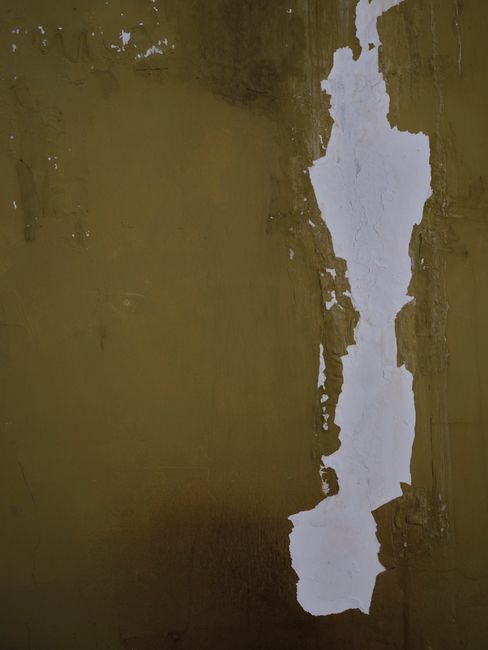
Alligatoring gets its name from the pattern it creates — a network of cracks across the surface that looks like alligator skin. It happens when paint loses its flexibility and can no longer expand and contract with temperature changes. This is common in Springfield where summer heat and winter cold create wide temperature swings.
Alligatoring can be caused by:
- Age — the paint has simply exceeded its service life
- Applying a hard coating over a softer one
- Applying paint over insufficient primer
- Applying paint in conditions that prevented proper curing
Once alligatoring starts, it will only spread. The cracked paint allows moisture beneath the surface, accelerating the failure. Addressing it requires proper preparation — power washing, sanding, priming — before new paint is applied. Simply painting over alligatored surfaces will not fix the problem.
7. Paint Chalkiness (Rubbing Off on Your Hand)
Run your hand across your home’s exterior. If a powdery residue comes off on your fingers, that’s chalking — and it’s a sign that the paint film is breaking down and eroding.
Chalking happens when UV radiation breaks down the paint’s resin binder, releasing the pigment. Some degree of chalking is normal as paint ages, but excessive chalking means the paint is failing rapidly. Left alone, chalking leads to:
- Complete loss of paint film in affected areas
- Unprotected substrate exposed to the elements
- Staining on adjacent surfaces (driveways, patios, other walls)
- Difficulty getting new paint to adhere without extensive preparation
Professional pressure washing can remove chalky residue, but the underlying cause requires proper repainting with quality products that resist UV degradation.
What Springfield’s Climate Does to Your Paint
Understanding why paint fails here helps you understand why timely maintenance matters so much:
- Summer heat — Temperatures regularly climb into the 90s, causing paint to expand and accelerating UV breakdown
- High humidity — Springfield’s humid summers create constant moisture exposure, fueling mildew and algae growth
- Storm season — Spring storms bring heavy rain, wind, and flying debris that stress exterior surfaces
- Freeze-thaw cycles — Winter temperatures that fluctuate above and below freezing cause materials to expand and contract, stressing caulk and paint
- Severe weather — Hail, high winds, and ice are hard on every exterior surface
This climate is exactly why regular exterior maintenance and pressure washing are so important in the Springfield area.
What to Do If You See These Warning Signs
Don’t wait. Every day that peeling paint, failed caulk, or biological growth is left unaddressed, the underlying damage gets worse — and the eventual repair gets more expensive. Here’s what we recommend:
- Inspect your home regularly — Walk the perimeter each season and look for the seven signs above
- Take photos and document changes — This helps you track progression and communicate with contractors
- Get a professional assessment — A reputable painting contractor can identify issues you might miss
- Address problems early — A fresh paint job with proper prep is far less expensive than rotted wood replacement
- Establish a maintenance schedule — Regular pressure washing and inspections extend the life of your paint
How First Impressions Painting Can Help
At First Impressions Painting, we serve homeowners throughout Springfield, Ozark, Nixa, Republic, and Battlefield. Whether you’ve spotted one of these warning signs or you just want a professional opinion on the condition of your home’s exterior, we’re here to help.
Our approach is straightforward:
- Honest assessment — We tell you what we find, even if it means you don’t need to paint yet
- Thorough preparation — Proper scraping, sanding, caulking, priming, and cleaning before any paint is applied
- Quality materials — Professional-grade products selected for Springfield’s climate
- Complete service — From pressure washing to repairs to final paint, we handle it all
- Real warranty — We stand behind our work
You can see the quality of our work in our project gallery. Every home we paint gets the same level of care and attention to detail.
Don’t Wait Until Small Problems Become Big Ones
The warning signs your home gives you aren’t suggestions — they’re urgent messages. Peeling paint isn’t just cosmetic. Fading color isn’t just aesthetic. Cracking caulk isn’t just a minor detail. They’re all indicators that your home’s protective barrier is failing.
Whether you need exterior painting, interior painting, pressure washing, or drywall repair, the team at First Impressions Painting is ready to help Springfield homeowners protect and beautify their homes. Reach out for a free consultation — because catching these signs early always saves you time, stress, and money.
Your home works hard to protect you. Return the favor by giving it the attention it needs before minor warnings become major problems. Browse our completed projects to see what’s possible, then reach out — we’re here when you need us.